The World Cup Meme Wave
Every four years the same thing happens, and every four years we act as though it is new.
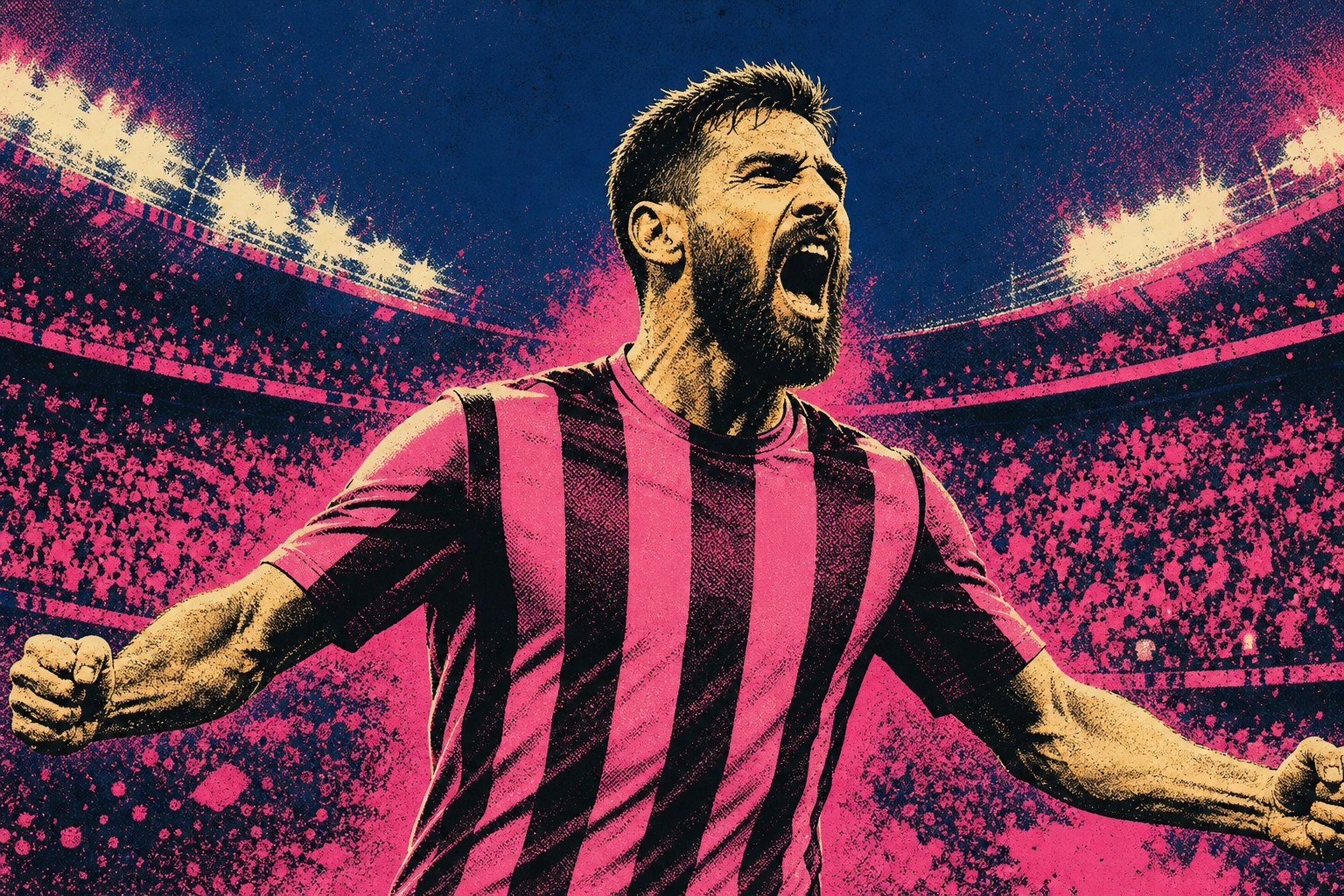
The 2026 FIFA World Cup — hosted across the United States, Canada and Mexico, opened 11 June — is producing its meme cycle on schedule. This is not a surprise. The tournament is the largest single-event audience on earth, and internet culture has known for at least two cycles now that it can harvest that attention for material. The harvest is underway.
Early breakouts have been dutiful. Referee Wilton Sampaio, wired with FIFA's new body-cameras and microphones for the tournament opener — Mexico 2-0 South Africa, three red cards, a chaotic debut — was immediately christened a cyborg and a drone operator, the cameras becoming the joke rather than the football beneath them. A German fan documented, with the forensic wonder of a naturalist abroad, his first encounters with American chain infrastructure: Waffle House as a holy land, Buc-ee's as an affront to spatial reason. The Korea-Mexico fan alliance — which dates to South Korea's elimination of Germany at the 2018 group stage, freeing Mexico to advance — has been revived and reported on as though it were a geopolitical development. And the boat-dance goal celebration, filed under aura farming, is being performed and then re-performed online at a clip that will exhaust it before the knockouts.
The pattern is familiar: a large event generates a cluster of memes in the opening week, most of them high-reach and low-shelf-life, fused to specific moments that will mean nothing to anyone who was not watching. The lift window is narrow. By the semi-finals the discourse will have moved on, the memes will be residue, and someone will be compiling a thread about how this World Cup's meme cycle compared to the last one. We will read it.
p.3 · Reel Media · Issue 01